



Drip and sprinkler agricultural irrigation pipes
02/03/2026
Share:


News in the same category
02/03/2026
Design your own automatic watering system
24/02/2026
Irrigation system saves water
In the process of choosing an automatic irrigation solution, many gardeners often wonder between drip and sprinkler agricultural irrigation pipes. Each irrigation system has its own advantages and limitations, depending on many factors such as crop type, area and density of cultivation, requirements for irrigation water accuracy, water supply capacity, power source as well as the need to combine fertilization through the irrigation system.
To help gardeners make appropriate and effective choices, Dekko will analyze with you in detail the pros and cons of drip irrigation systems and sprinkler irrigation systems, thereby finding the optimal irrigation plan for each farming model.
Advantages and disadvantages of drip irrigation systems
Advantages and disadvantages of drip irrigation systems - Water saving solution with agricultural irrigation pipes
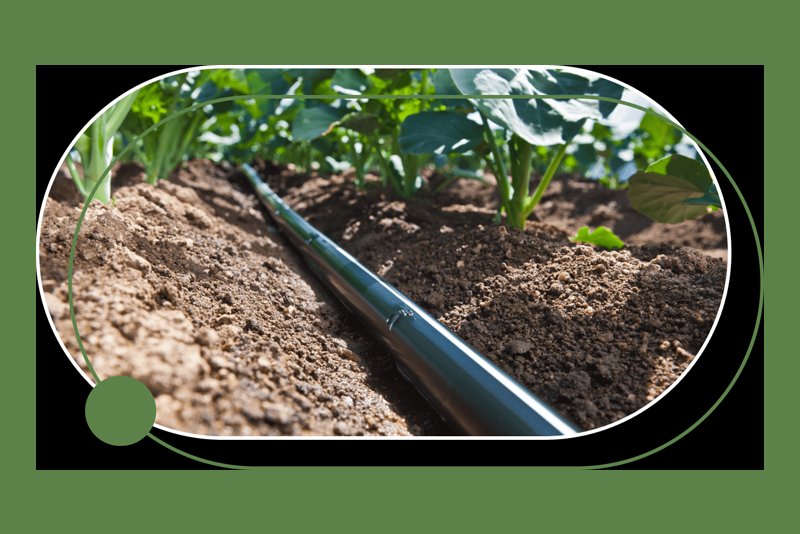
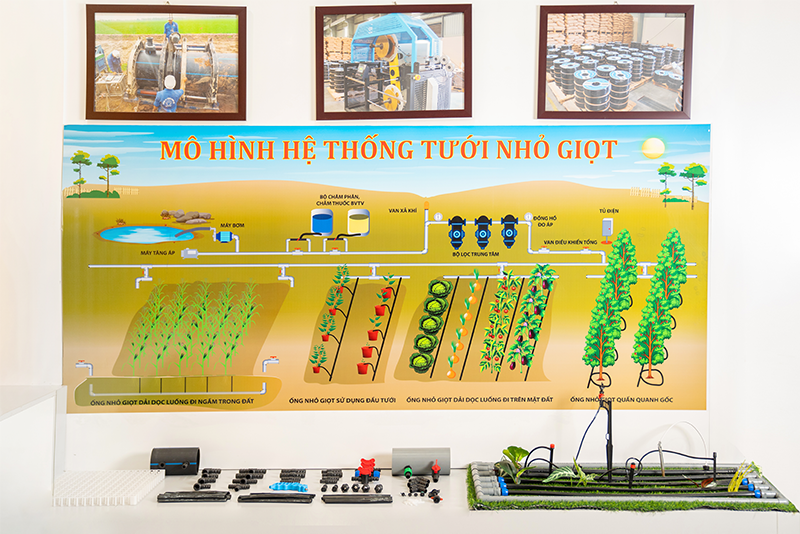
Drip irrigation system is one of the most effective water-saving automatic irrigation solutions today. Thanks to the mechanism of bringing water directly to the root zone, agricultural drip irrigation pipes help accurately control the amount of water and nutrients, especially suitable for modern farming.
Advantages of drip irrigation system
- Outstanding water use efficiency
Water is supplied directly to the plant root area, minimizing evaporation and runoff. When combined with agricultural mulch or straw, water use efficiency can reach 90–95%, much higher than traditional irrigation methods. - Save water and control flow accurately
Thanks to the local irrigation feature, gardeners can accurately calculate the amount of water to irrigate according to each type of plant, each growth stage and climate - soil conditions, clearly contributing to saving water with agricultural irrigation pipes. - Reduce fertilizer and nutrient loss
Drip irrigation systems limit nutrient leaching, helping fertilizer to be delivered directly to the roots. Fertilizing through a drip irrigation system is also easy to do and highly effective. - Suitable for complex terrain
Drip irrigation pipes work effectively on uneven terrain or irregularly shaped land, without requiring much leveling. - Limit weed growth
Only the root zone is watered, the soil surface between the rows is drier, thereby inhibiting weeds. This solution is especially effective when combined with agricultural mulch. - Reduce pests and diseases
Without wetting the leaves and stems, the drip irrigation system helps limit moist environments - the main cause of fungal and bacterial diseases. - Save energy and reduce soil erosion
The system operates at low pressure, helping to save energy. Water penetrates slowly into the soil, limiting soil disturbance and surface erosion. - It is safer to use recycled water
Water is not splashed onto foliage, limiting odor and the risk of spreading pathogens, suitable for some water reuse models. - Save labor, increase crop productivity
Easy to automate, reducing irrigation labor. Stable moisture around the root zone helps plants grow evenly, improving productivity and quality of agricultural products.
Disadvantages of drip irrigation systems
Besides many advantages, drip irrigation systems also have some limitations that need to be considered:
- Requires high quality water source
Due to the small size of the drip eye, the system needs to treat and filter upstream water more thoroughly, increasing initial investment costs. - Risk of clogging
Drip tips can become clogged with dirt, algae, bacteria or chemical precipitate if not regularly maintained. - Needs regular maintenance
The system needs to be checked and cleaned periodically to ensure stable water flow. - Not suitable for all types of plants
Some plants require irrigation to cover the entire canopy or irrigation from above may not be suitable if only drip irrigation is used.
Advantages and disadvantages of sprinkler irrigation systems - Popular large-area irrigation solutions
A sprinkler irrigation system is an automatic watering method in which water is sprayed in small droplets from sprinklers, simulating natural rain. Water is sprayed evenly over a large area, ensuring moisture for plants without causing waste.
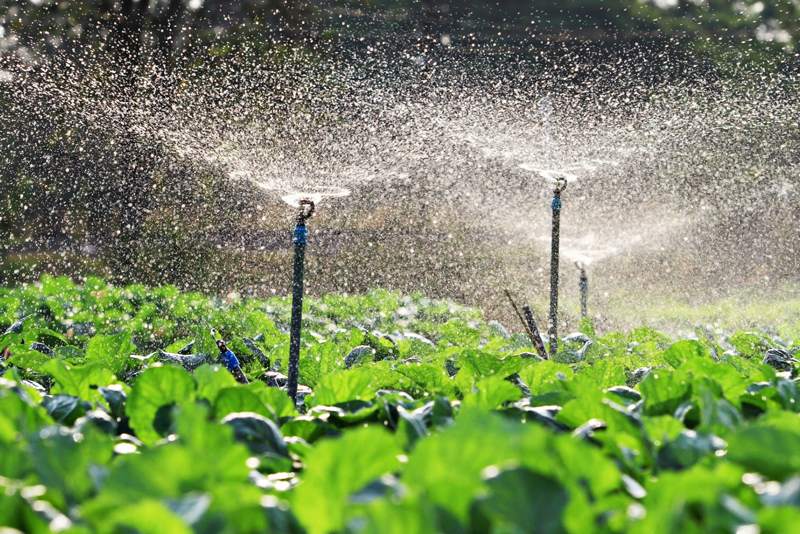
This system is suitable for many types of crops, from fruit trees, vegetables, to industrial crops and landscape trees. In addition, the system is also used in gardens, greenhouses and large farms.
This system is suitable for many types of crops, from fruit trees, vegetables, to industrial crops and landscape trees. In addition, the system is also used in gardens, greenhouses and large farms.
Advantages of agricultural sprinkler irrigation pipe systems
- Distribute water evenly over a large area: When designed properly, a sprinkler irrigation system helps water evenly cover the entire farming area, meeting the irrigation needs of many different types of crops.
- Cooling the planting area, supporting plant growth: Spray irrigation not only provides water to the roots but also helps cool down the leaf surface and surrounding air, especially effective in prolonged hot conditions.
- Less picky about water sources than drip irrigation: Sprinkler irrigation nozzles have the ability to allow small sediment particles to pass through, helping to reduce the need for input water treatment, suitable for many agricultural production areas.
- Suitable for many terrains and soil types: Rain spray agricultural irrigation pipe systems adapt well to rough, uneven terrain and many different soil types.
- Quick coverage of large cultivated areas: This is an effective solution for large-scale fields, dust irrigation, frost protection or crop cooling irrigation.
- Easy to integrate fertilizer and plant protection chemicals: Allows combining fertilizer and pesticide spraying through the irrigation system, helping to save labor and operating time.
- Easy to install, easy to adjust: Compared to drip irrigation, sprinkler systems have simpler configurations in many popular farming models.
Disadvantages of agricultural sprinkler irrigation pipe systems
- Lower water use efficiency: Due to the effects of evaporation, wind drift and irrigation beyond the root zone, the water use efficiency of a sprinkler system is usually only about 70–85%, lower than that of drip irrigation.
- Higher energy costs: The system requires high operating pressure, which means using high-capacity pumps, increasing electricity costs.
- Easy to water unevenly if designed incorrectly: Improper nozzle arrangement can cause lack of water at the nozzle base or not reaching the desired spray radius.
- Not suitable for plants sensitive to leaf moisture: Some plants are susceptible to the effects of leaves being wet for long periods of time, reducing productivity and quality of agricultural products.
Compare drip and sprinkler agricultural irrigation pipes – Which system should you choose?
In modern farming models, drip and sprinkler agricultural irrigation pipes are the two most popular solutions. Each system has its own advantages in terms of water saving ability, investment costs and scope of application. The comparison table below will help people easily make the right choice:
Criteria | Drip irrigation | Rain spray irrigation |
Water saving level | ⭐⭐⭐⭐⭐ | ⭐⭐⭐ |
Irrigation range | Locally, concentrated in the root zone | Wide area |
Initial investment costs | Medium – high | Low – medium |
Influenced by weather | Little (not blown by the wind) | Many (wind, evaporation) |
Ability to fertilize through the system | Very good, accurate | Limit |
Suitable plant type | Fruit trees, perennial trees, high-value trees | Vegetables, grass, nurseries |
Which irrigation system should I choose?
Choosing between drip and sprinkler agricultural irrigation pipes should be based on practical factors such as:
- Type of plant and its water needs
- Area and shape of cultivated land
- Existing water source and water pressure
- Investment budget and operating ability
Suggested choices according to each need
- Fruit trees, industrial trees, perennial trees → Prioritize drip irrigation systems to save water and fertilizer
- Vegetables, lawns, nurseries → Sprinkler irrigation system helps water quickly and evenly cover the area
- Large area, high water cost → You should choose drip irrigation to reduce water loss
- Limited budget, need to deploy quickly → Sprinkler irrigation is a flexible solution, easy to install
In summary, each solution in the drip and sprinkler agricultural irrigation pipe group has its own advantages and is suitable for different farming conditions. Drip irrigation stands out thanks to its ability to maximize water savings, delivering water and nutrients directly to the root zone, especially effective in water-scarce areas and high-value crops. However, this system requires carefully filtered water to ensure stable operation and limit clogging.
Meanwhile, sprinkler irrigation has the advantage of being able to cover a large area, effectively combining needs such as cooling, preventing frost and foliar irrigation. However, if not designed and operated properly, the system can increase leaf humidity, creating conditions for some pests and diseases to arise.
With experience and a diverse product portfolio, DEKKO provides a complete set of drip and sprinkler agricultural irrigation pipe solutions, flexibly meeting each farming model, helping farmers optimize water usage, reduce operating costs and improve long-term production efficiency.
You may be interested
23/03/2026
Agricultural irrigation pipes for gardeners - The foundation of an effective and sustainable irrigation system
Agricultural irrigation pipes for gardeners are a flexible, easy-to-install and water-saving irrigation solution for vegetable gardens, fruit trees and ornamental plants. The product is durable, resistant to sun and rain, suitable for drip or sprinkler irrigation systems, helping plants grow evenly and reducing care.
02/03/2026
Built according to the model of an organic farm
Trang trại SUNNY FARM được xây dựng theo mô hình một trang trại hữu cơ – không sử dụng bất kì sản phẩm hóa học nào vào chăn nuôi, trồng trọt, . Convenient purchase
 Fast delivery
 Attractive offers
 Flexible payment